I remember watching Arcane for the first time back in 2023, completely unaware that I was about to experience something that would redefine how I view animated storytelling. As someone who had never touched League of Legends, I expected to feel like an outsider looking in, but instead, I was immediately enveloped in the world of Piltover and Zaun. What struck me most wasn't just the stunning animation or complex characters—it was the feeling that this world existed long before the cameras started rolling and would continue long after they stopped. This sensation, I later realized, was largely due to the show's masterful use of half-told storytelling, a narrative technique that has only grown more sophisticated in the years since Arcane's release.
Half-told storytelling is like finding pages torn from different novels scattered throughout a library—each fragment hints at a complete story you'll never fully read, yet their very incompleteness makes the library feel more real. In Arcane, these narrative fragments aren't just background noise; they're the subtle brushstrokes that transform a painted backdrop into a breathing ecosystem. From the moment we're introduced to the divided cities, we're shown glimpses of lives being lived just outside our main characters' orbits. Ekko's past with the Firelights appears like graffiti on a wall—faded but telling, a story written in spray paint rather than ink. The relationship between Milo and Claggor feels like overhearing half a conversation through an apartment wall—you catch the emotional tone but must imagine the words. And Mel's trusted advisor moves through scenes like a shadow with its own history, present but unexplained.
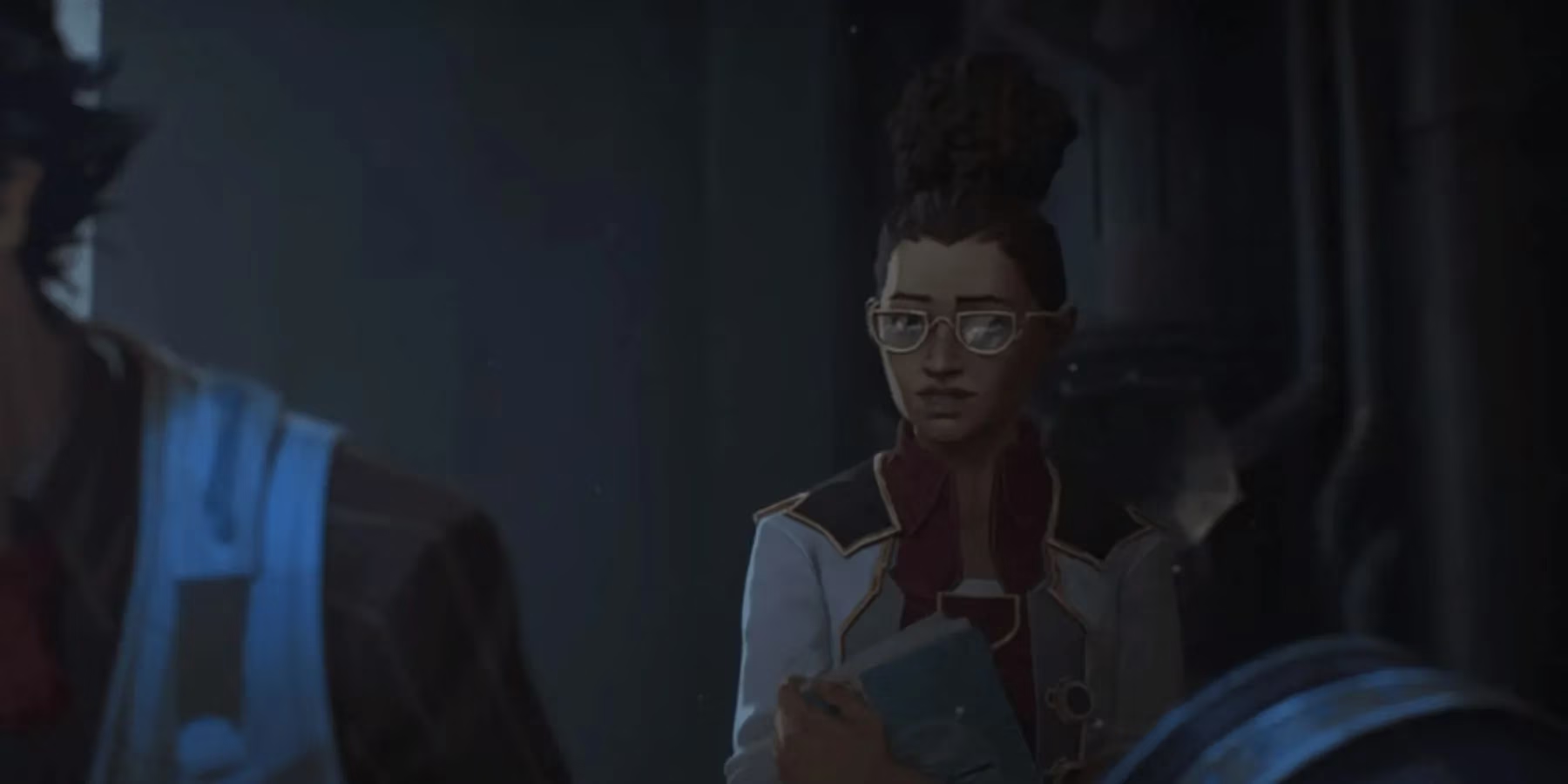
What makes these half-told stories so effective is how they mirror our own experiences in 2026. In our hyper-connected world where we're bombarded with complete narratives—polished social media stories, carefully crafted news reports, algorithmically generated content—Arcane reminds us that reality is actually made of fragments. We see strangers on the street, catch snippets of conversations, notice worn objects in friends' homes—each is a half-told story we'll likely never hear completed. The show replicates this experience deliberately, creating what I like to call 'narrative negative space'—the empty areas around the main story that somehow make the whole picture more compelling.
Consider the brilliant example of Silco's ashtray, which has become legendary in animation circles over the past few years. The script simply called for Silco to stub out a cigar, but the animators at Fortiche Productions transformed this mundane direction into a profound character moment. By etching Jinx's trademark doodles onto the ashtray, they created a silent story about their relationship—a father preserving his daughter's childhood art, much like parents in our world stick drawings on refrigerators. This small detail works like a time capsule buried in a character's desk drawer—unexpectedly discovered and speaking volumes about years of unwritten history.
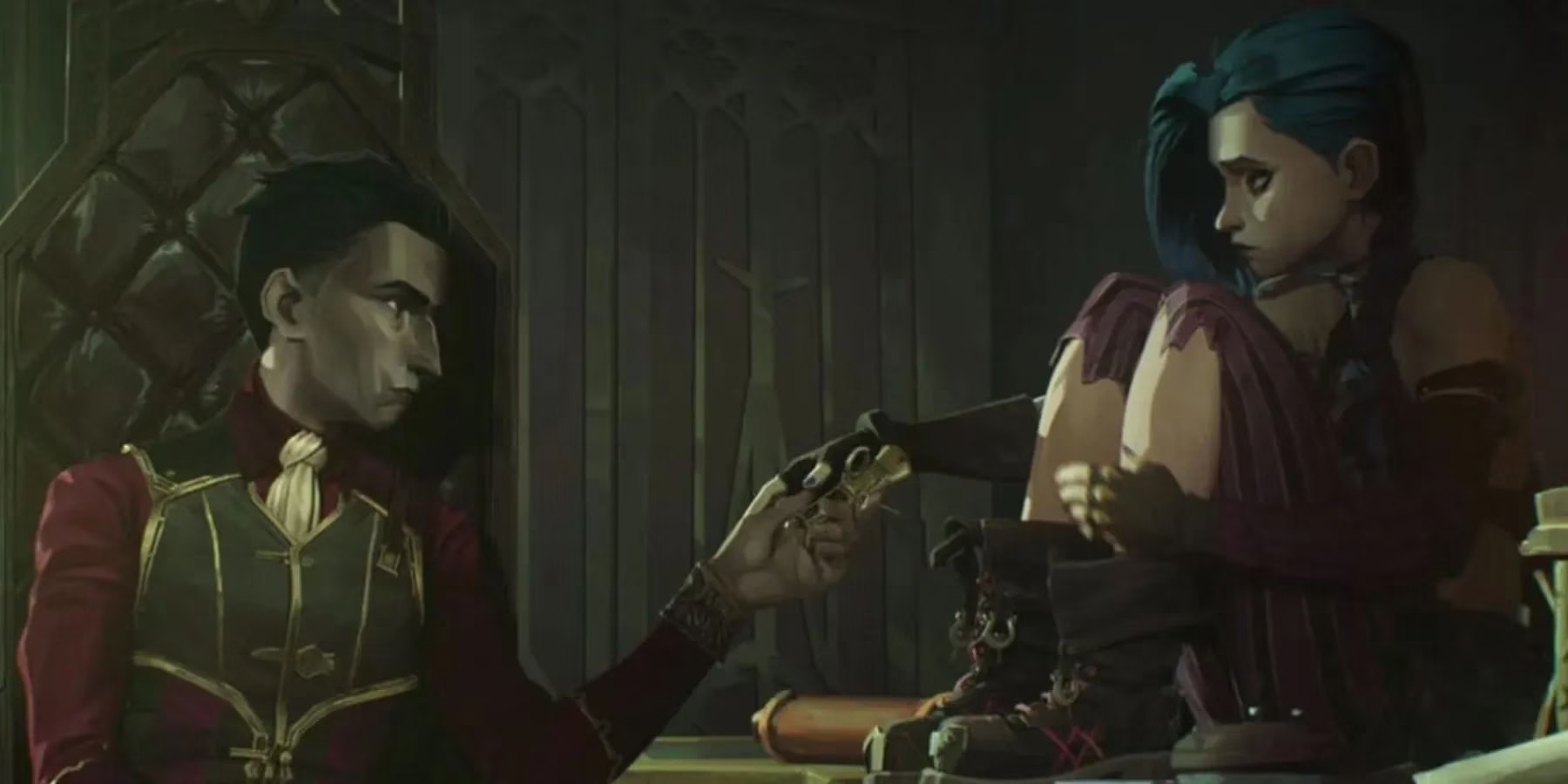
The creative process behind these moments reveals why animation has become such a powerful medium for this type of storytelling. Unlike live-action where directors tightly control every element, animation provides what I'd describe as 'collaborative white space'—room for artists to contribute their own narratives. When a script says "they fight," animators don't just choreograph blows; they imbue the conflict with unspoken history through character expressions, environmental damage, and subtle references to past encounters. This collaborative storytelling has only expanded since 2023, with shows like Netflix's 2025 series Mythos and Amazon's Chrono-riders adopting similar approaches.
Here's what makes Arcane's approach particularly revolutionary:
| Technique | Traditional Use | Arcane's Innovation |
|---|---|---|
| Background Characters | Set dressing with minimal personality | Each feels like they have off-screen lives |
| Environmental Details | Establish setting and mood | Contain embedded character histories |
| Unanswered Questions | Usually resolved in sequels or spin-offs | Often left permanently mysterious |
| Character Backstories | Fully explained through flashbacks | Only hinted at through objects and behaviors |
As a viewer in 2026, I appreciate how Arcane's approach has influenced subsequent animated series. The technique of half-told storytelling has evolved from being a creative choice to something approaching a narrative philosophy. Recent shows like Echoes of Aethel (2024) and Neon Nexus (2025) have taken this further, creating what critics are calling 'ambient narratives'—stories that exist in the periphery, felt rather than explained.
Perhaps the bravest aspect of Arcane's storytelling is its resistance to the contemporary demand for complete explanation. In an era where every plot hole must be filled, every mystery solved, and every backstory explored in spin-offs, Arcane maintains beautiful silences. We'll likely never learn:
-
The full story of Vi and Powder's parents
-
Exactly what happened between Vander and Silco in their youth
-
How Sky truly felt about her journey from the undercity
These aren't oversights—they're deliberate gaps that allow our imaginations to participate in the storytelling. Like finding an abandoned theater with the stage still set, we're left to imagine what plays were performed there and by whom.
Reflecting on Arcane three years after its groundbreaking release, I realize its greatest achievement might be how it taught audiences to appreciate narrative restraint. In our information-saturated world, the show demonstrates that sometimes the most powerful stories are the ones only half-told, the characters who remain partially in shadow, and the histories that linger just beyond explanation. It creates a world that feels less like something we're watching and more like something we've visited—and like any real place, we leave with more questions than answers, carrying those half-told stories with us long after the credits roll.