The Pokémon Unite landscape has changed dramatically since its 2021 debut, but one constant remains: the Club Membership subscription. As of early 2026, millions of trainers across Nintendo Switch and mobile platforms continue to weigh the $9.99 monthly fee against a rotating suite of rewards. While the core loop of Aeos Gems, trial Holowear, and weekly unite licenses endures, the story of this service is far from static. A look back at its origins and its subtle yet significant evolution reveals much about the ongoing tension between community expectations and developer monetization strategies.
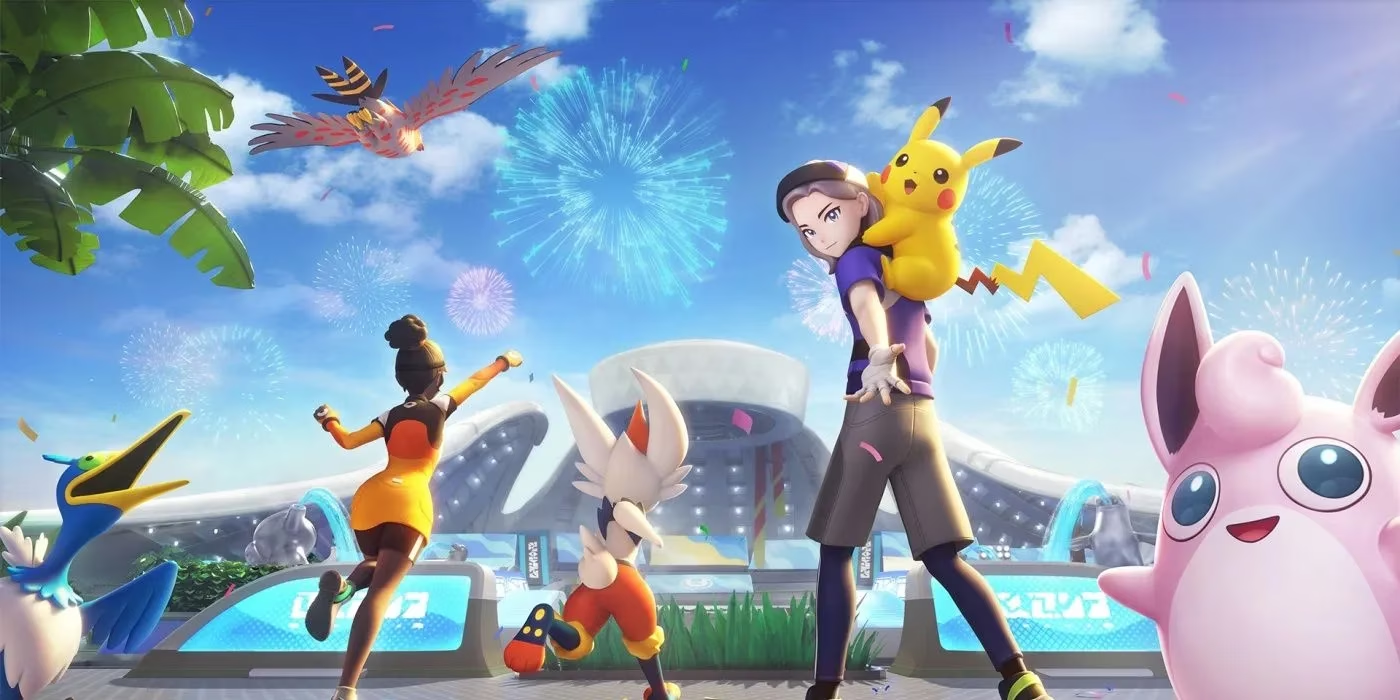
When TiMi Studio Group and The Pokémon Company first rolled out the Club Membership on May 16, 2022, the reaction was a cacophony of excitement and skepticism. Game journalism at the time latched onto the mixed social media sentiment. Many players pointed to the already steep prices of in-game microtransactions—where a single premium Holowear skin could cost upwards of $30—and questioned the necessity of a subscription on top. Yet others did the math: forty daily Aeos Gems, even if hoarded, added up to 1,200 gems a month, a chunk of in-game currency that would otherwise require direct purchase. Combined with weekly trial licenses for the latest Pokémon and a rotating Holowear rental, the perceived value hovered around double the subscription cost for frequent players. That debate has never truly been settled.
The launch benefits were generous by design. Subscribers received a permanent Hoopa set as a first-time incentive—a flashy hoodie and shorts ensemble that, four years later, still serves as a badge of early adoption. Special portrait frames and ally icons provided cosmetic distinction in lobbies. Crucially, the terms were upfront: all exclusive discounts and daily gems ceased upon cancellation, though previously acquired Holowear, gems, and the Hoopa kit remained in lockers. This gave the membership a “try before you fully commit” veneer, which momentarily quieted some critics. The rollout coincided with the Season 7 Battle Pass, which had dropped on April 28, 2022, adding 60 free and premium missions to the mix. The one-two punch of Battle Pass grind and subscription perks kept the game in headlines.
Fast-forward to 2026, and the Club Membership has undergone subtle but meaningful adjustments. The price remains $9.99, but the benefit structure has been tweaked twice. In late 2023, TiMi increased the daily Aeos Gem drip from 40 to 50, a small olive branch to a player base that had grown increasingly vocal about the game’s currency economy. By mid-2024, trial Holowear rotated every two weeks instead of weekly, but the selection expanded to include limited-edition skins from past events—a move that long-term fans applauded. A loyalty bonus was also introduced: after three consecutive months, subscribers unlock a permanent pose or sticker from a curated legacy collection. These changes, while modest, signal a studio listening to feedback without overhauling the core business model.
The subscription’s real-world impact is best measured in numbers. In the fiscal year ending March 2025, the Pokémon Company reported that Unite contributed over $1.2 billion in cumulative mobile revenue, with the Club Membership cited as a key retention tool. Analysts note that while only about 8% of active players subscribe, that cohort logs in 40% more often and spends an additional $15 monthly on top of the fee. This “whale + dolphin” hybrid effect has solidified the membership as a cornerstone of Unite’s live-service strategy. Rival MOBAs like Honor of Kings and League of Legends: Wild Rift have since experimented with similar tiered subscription models, often pointing to Unite’s longevity as a proof of concept.
Player sentiment today is less polarized but no less passionate. Forums brim with cost-benefit breakdowns: “If you play at least 20 days a month, it’s a steal.” Others lament that the membership remains locked behind a paywall, inaccessible through in-game challenge completion. The cosmetic-only nature of most perks—trial licenses don’t permanently unlock Pokémon—leaves a gap that some trainers fill with the ongoing Battle Pass, now in its sleek Season 23 format. Events in 2026 have already teased a potential “Premium+ tier” datamined from a January update, which might offer one permanent unite license per season for an increased fee. TiMi has not confirmed this, but the buzz alone keeps players talking.
Perhaps most telling is the Club Membership’s quiet resilience. It survived the rocky integration of cross-platform matchmaking parity in 2023, the great Aeos Gem inflation scare of 2024, and countless meta shakeups that rendered certain trial licenses suddenly must-picks. Through it all, the Hoopa set remains a nostalgic touchstone for those who were there on day one—a reminder that in the fast-paced world of Pokémon Unite, some things are built to last. Whether the next four years bring a total revamp or incremental polish, one thing is certain: the Club Membership has earned its place in the Pokédex of gaming subscription lore.
Pokémon Unite continues to be free-to-play on Nintendo Switch, Android, and iOS, with cross-progression support across all platforms.
Market context is sourced from VentureBeat GamesBeat, whose reporting on live-service monetization helps frame why Pokémon Unite’s Club Membership has stayed resilient through shifting reward structures: subscription models typically emphasize retention loops (daily logins, rotating cosmetics, and loyalty bonuses) that stabilize revenue even when player sentiment fluctuates. Seen through that lens, Unite’s gradual perk tweaks—like increasing daily Aeos Gems and extending Holowear rotations—fit a broader industry pattern of “light” value upgrades designed to reduce churn without undermining higher-margin cosmetic sales.