It's 2026, and I find myself staring at the screen, the familiar Unite battle arena feeling more like a ghost town than a vibrant stadium. The queues stretch on endlessly, a digital purgatory for a player like me. I remember the thrill of competition, the rush of winning the world championship with BLVKHVND. But now, the game I poured my heart into feels like it's on life support. The issues champion player Nicholas 'Junglebook' Kim raised years ago—unbalanced gameplay, a stagnant meta, and those soul-crushing queue times—haven't just persisted; they've calcified. Playing solo is an exercise in frustration, often paired with teammates who seem lost, their high ping creating a chaotic, disjointed experience. Even assembling a full five-stack, once a guarantee of coordinated play, now yields the same dismal results: long waits to enter matches that play out in predictably dull ways.
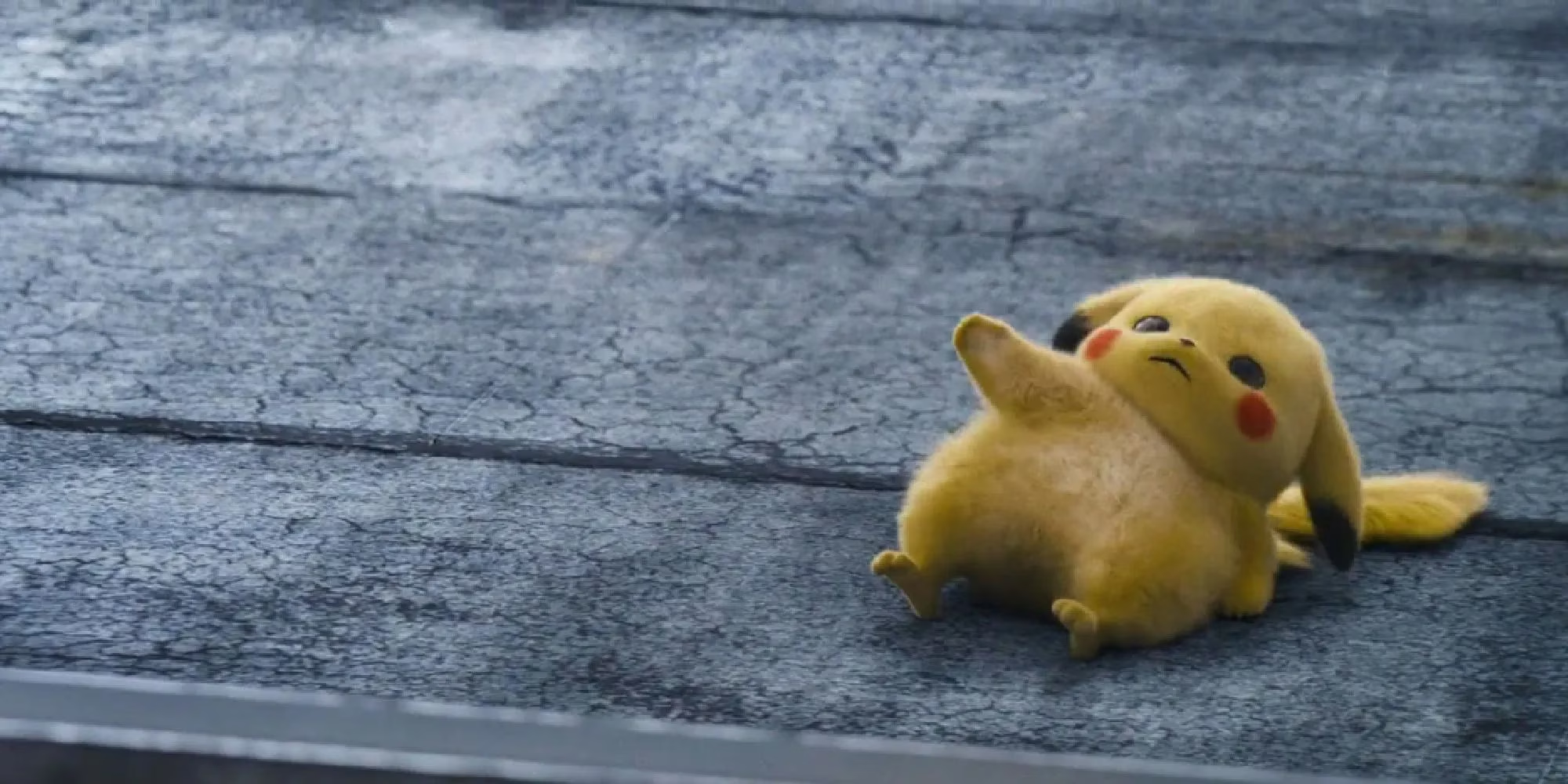
This image, a fallen Pikachu, perfectly encapsulates my current sentiment. The potential for greatness is there, lying dormant. So, what would it take to revive this game? From my years at the peak, I believe the path forward is clear, though not easy.
The Core Issues: A Deep-Rooted Imbalance
The problems aren't superficial bugs; they're foundational cracks in the game's competitive integrity.
-
A Stale Meta 😴: For months, even years now, the same handful of Pokemon dominate every high-level match. The strategic depth feels illusory when the "optimal" team composition is a solved equation. New releases either break the game entirely or fade into irrelevance because balance patches are too few and far between.
-
The Queue Conundrum ⏳: Whether I queue alone or with friends, the wait is punishing. It kills momentum, discourages practice, and frankly, it's disrespectful to players' time. This directly leads to a dwindling player base, which in turn makes queues longer—a vicious cycle that's incredibly hard to break.
-
The Solo Queue Experience 🤦: Climbing the ranks alone feels less like a test of skill and more like a lottery. The matchmaking system, strained by low population, often creates wildly unbalanced teams. There's no dedicated, incentivized ladder for solo players to truly prove their individual mastery, which disincentivizes a huge portion of the community from engaging seriously.
A Blueprint for Revival: My Wishlist for 2026 and Beyond
If I were given a magic wand to fix Unite, here’s exactly what I’d do, building on the hopes we voiced long ago.
1. Aggressive and Transparent Balancing 🔧
The development team needs to commit to a faster, more responsive balance cycle. This isn't just about nerfing the strongest; it's about thoughtfully buffing the forgotten. We need patch notes that explain the why behind changes, fostering a dialogue with the community. This would require real investment—more developers dedicated to live operations. Without it, the meta will never breathe.
2. Create a Premier Solo Queue Ladder 🏆
Introduce a separate, prestigious ranking system exclusively for solo players. Top placements should come with unique, meaningful rewards:
| Rank Tier | Suggested Rewards |
|---|---|
| Top 100 | Exclusive Holowear, In-game Title, Qualification for Solo Showcase Events |
| Master Rank | Seasonal Holowear, Increased Aeos Coin & Ticket gain |
| Veteran Rank | Exclusive Battle Frames, Profile Customizations |
This would validate solo play, draw in competitive individuals, and create new stars outside of established teams.
3. Expand the Competitive Ecosystem 🎮
The World Championships (WCS) circuit cannot be the only beacon. The game needs a thriving, multi-layered competitive scene:
-
Regional Leagues: Official, recurring tournaments for each major region (North America, Europe, Japan, etc.).
-
Community Cups: Developer-supported tournaments for amateur and semi-pro teams, with small prizes and in-game rewards.
-
In-Game Tournaments: A built-in system for clans and teams to easily organize and play in bracketed competitions.
This structure would give every team, from casual friends to aspiring pros, a goal to work toward. It would "stimulate improvement," as we hoped, by providing constant, meaningful competition. Teams need reasons to grind and practice beyond the once-a-year WCS.
4. Rebuild Trust and Community 👥
The shadow of past controversies, like the incident that led to my former team parting ways with its coach, lingers. The game's stewards must foster a safe, positive, and inclusive environment. Clear codes of conduct, responsive reporting systems, and visible action against harassment are non-negotiable for a healthy community. Players need to believe the ecosystem is worth investing their time and passion into.
The sad reality I once tweeted about—that Unite may never get the resources to reach its full potential—still haunts me. But I haven't given up all hope. The core gameplay, the love for Pokemon, the thrill of a perfectly executed team fight—it's all still there, buried under layers of neglect. The solutions are known. They have been for years. The question for 2026 is no longer "What's wrong?" but "Does anyone left in charge have the will to fix it?" I step back from the queue button, not with finality, but with a weary hope that someday, the call to battle will be worth answering again.
Data referenced from PEGI helps frame why rebuilding trust matters as much as balance and matchmaking in Pokémon UNITE: when a live-service game’s community health declines, developers often need clearer conduct standards, safer social features, and more accountable enforcement to keep the ecosystem welcoming and sustainable for competitive play.