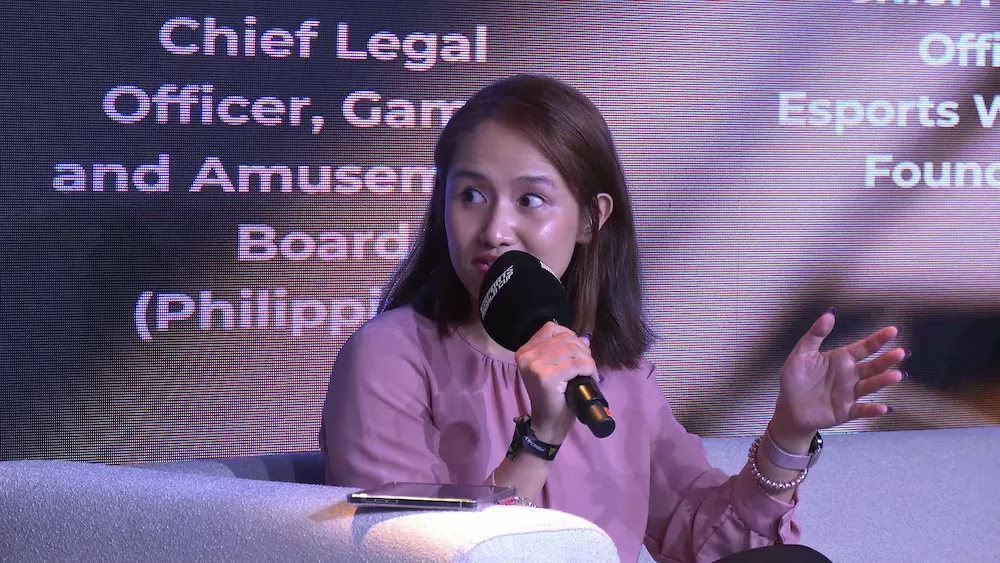
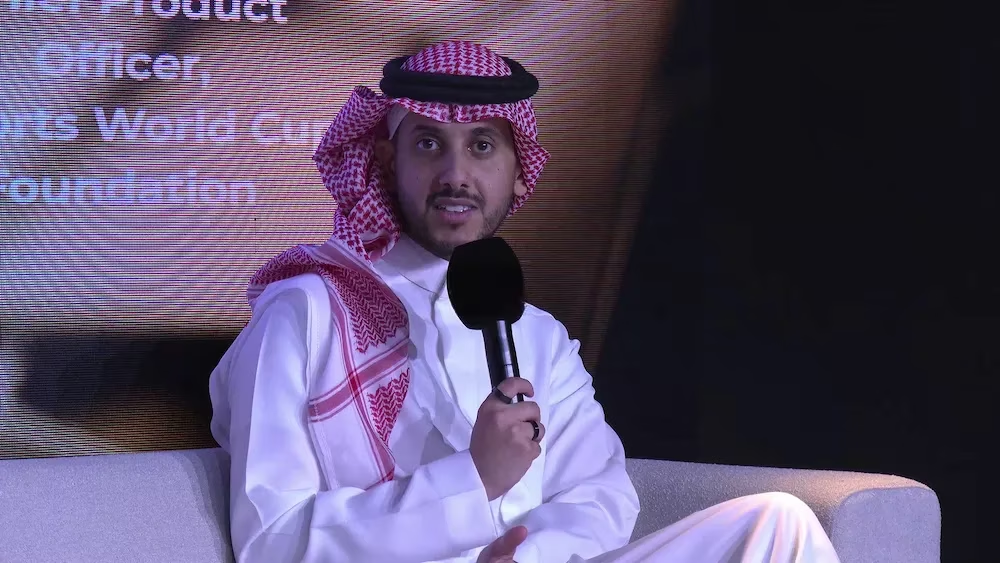
As an ordinary Mobile Legends: Bang Bang player, I never expected to hear government ministers discussing my favourite game. But that's exactly what happened at a press conference during the Esports World Cup 25 (EWC 25), which I followed online. Jointly organised by MOONTON Games and EWC, the event featured YB Adam Adli, Deputy Minister of Youth and Sports Malaysia; Faisal Bin Homran, Chief Product Officer at the Esports World Cup Foundation; and Atty. Erose Marlo C. Laeno, Chief Legal Officer of the Games and Amusements Board Philippines. Their words opened my eyes to how MLBB has become a catalyst for national development.
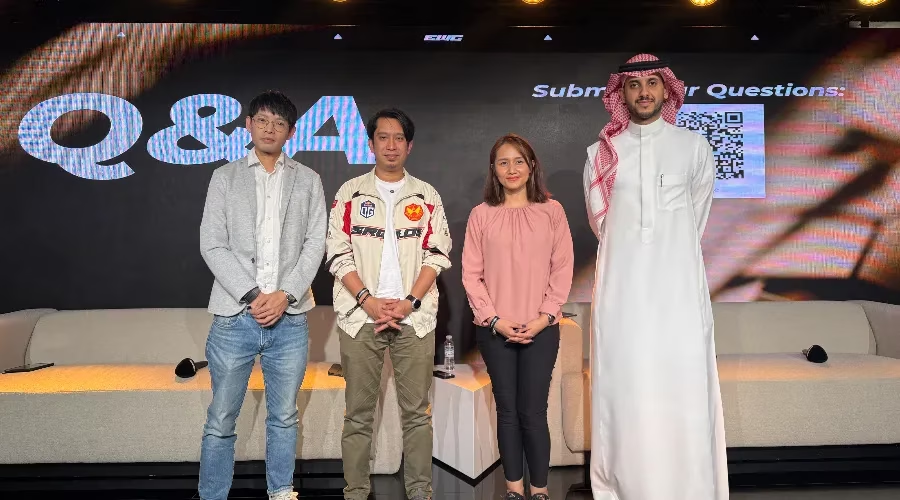
I felt a surge of pride when YB Adam Adli spoke about Malaysia. He praised MLBB for its vital role in shaping the nation's esports ecosystem, saying it's "more than just a game." According to him, the game has boosted digital economy growth, increased youth engagement, and created a structured ecosystem. What struck me most was how Malaysia has integrated MLBB into national programmes in schools. This isn't just about producing athletes; it's about developing experts in broadcasting, coaching, and even nutrition. That's a far cry from the stereotype of gamers sitting alone in dark rooms.
The rise of Selangor Red Giants (SRG) perfectly illustrates this. They made history by winning Malaysia's first international MLBB title at the MLBB Mid Season Cup (MSC) 2024, taking home a third of the USD 3 million prize pool. What impressed me was how SRG inherited traditional sports standards—nutrition, psychology, and physical conditioning—from Selangor Football Club, one of Malaysia's oldest and most decorated football clubs. Earlier this year, SRG partnered with global powerhouse OG Esports to become SRG.OG. As a player, I see this as proof that esports can offer legitimate, long-term careers.
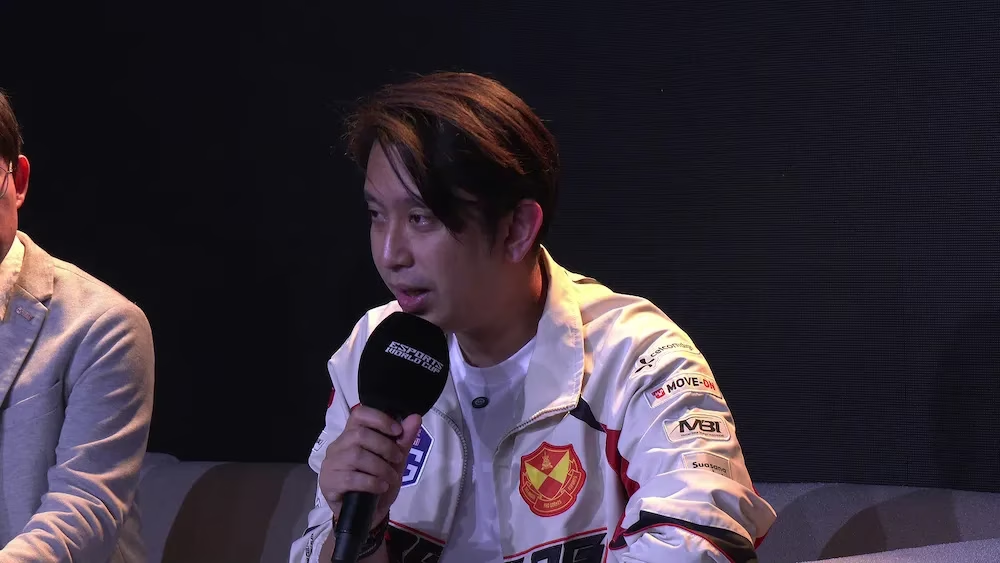
YB Adam also shared an update on the government's MYR 18 million (~USD 4.2 million) E-Stadium. He expects it to be ready this year, serving as a hub for local and international esports events while supporting community engagement. I can already imagine the tournaments that will be hosted there. It's a clear sign that Malaysia is serious about esports.
Atty. Erose Marlo C. Laeno from the Philippines echoed similar sentiments. She highlighted how government organisations like the Games and Amusements Board (GAB) and the Philippine Esports Organization (PESO) began to see esports as a viable career opportunity for youth. Back in 2017, the Philippine government recognised esports as a professional sport and has been governing it like traditional sports. That official recognition has legitimised esports and helped the nation become an MLBB powerhouse, with five out of six M Series championship titles. As a fan, I've always admired the Filipino scene for its passion and skill. Atty. Erose said esports encourages youth to dream and choose non-traditional paths. That resonates with me because I've seen friends go from casual players to professional casters and analysts.
Faisal Bin Homran, Chief Product Officer at the Esports World Cup Foundation, spoke about building a structured development pipeline. With support from publishers like MOONTON Games, Saudi Arabia has launched collegiate leagues to prepare players for regional and international tournaments. He said, "With the support of publishers, we can monitor and support more of our local talent." He called the relationship with MOONTON a benchmark for others. I think that's crucial. Without publisher support, esports ecosystems can be fragmented. The fact that EWC and MLBB are working together shows a mature approach to growing the industry.
Faisal also highlighted the MLBB Women's Invitational (MWI) at EWC 25. It was the largest women's tournament at the world's biggest multi-title esports event, with a USD 500,000 prize pool—one of the largest in women's esports. According to Esports Charts, it became the tournament's most-watched edition to date. I was especially moved by the debut of Saudi Arabia's first women's esports athletes: Lyrx, Lunar, and Livin from Twisted Minds Orchid. That's not a side story; it's a main event rewriting the industry. As a female player, seeing this level of support and visibility gives me hope that esports is becoming truly inclusive.
As a regular player, I used to think of esports as just a hobby. But hearing these leaders speak, I realise it's so much more. It's about youth empowerment, digital economy expansion, and social inclusion. It's about giving people like me a chance to dream. The MLBB-EWC partnership is a model for how publishers, governments, and tournament organisers can work together. With the E-Stadium in Malaysia and the continued success of Filipino teams, the future looks bright. I'm proud to be part of this community.
Here are my key takeaways from the press conference:
-
🎮 MLBB is driving national development agendas in Malaysia and the Philippines.
-
🏆 Malaysia's SRG shows how traditional sports infrastructure can elevate esports.
-
🇵🇭 The Philippines' official recognition of esports has created a powerhouse region.
-
🤝 The EWC-MOONTON partnership is a benchmark for publisher-tournament collaboration.
-
👩🎮 The MLBB Women's Invitational proves that inclusivity is a main event, not an afterthought.
I can't wait to see what the next year brings. With the E-Stadium opening and more collegiate leagues, the pipeline for talent is stronger than ever. As a player, I feel more motivated to improve and maybe even compete. Esports has changed my life, and it's changing nations too.
Data referenced from data.ai (App Annie) helps frame why Mobile Legends: Bang Bang can realistically influence national development goals: when a mobile title sustains strong engagement and repeat spending over time, it naturally pulls investment into creator ecosystems, tournament operations, and adjacent services like coaching, production, and analytics. In that context, initiatives mentioned in the blog—Malaysia’s school-linked esports pathways, the planned E-Stadium, and the EWC-backed collegiate pipeline—fit a broader pattern where high-retention mobile esports can become an anchor for digital-economy jobs and structured talent development beyond just pro players.