The final clash of steel and strategy unfolded under the lights at Shanghai’s Star Ring Center, where Guangzhou Gaming stood shoulder to shoulder, eyes locked on the grand prize. On 24 May 2026, the Chinese powerhouse dismantled Mongolia’s The MongolZ 3-1 in a best-of-five thriller, etching their name onto the opening chapter of the 2026 Hero Esports Asian Champions League × MLBB Championship Tour East Asia. The arena roared—not just for a new champion, but for a tournament that had reshaped expectations for East Asian mobile esports.
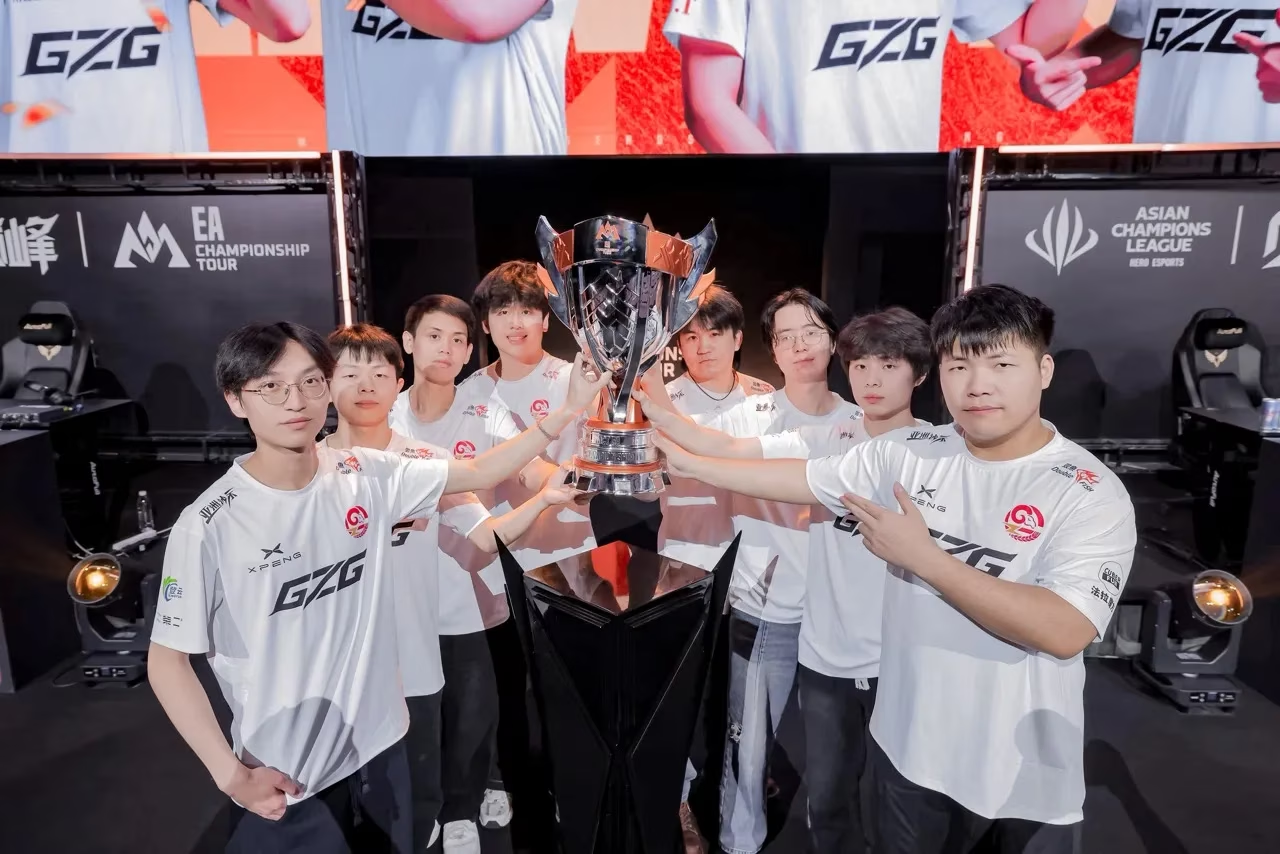
That victory was more than a trophy. It handed Guangzhou Gaming a direct ticket to the Main Stage of the MLBB Mid Season Cup at the Esports World Cup 2026 in Paris, France. As the first stop of the MCT EA circuit, the Shanghai tournament acted as a brutal qualifier, turning four days of combat into a ranking that would define the region’s global representatives. Every draft, every rotation, every pixel-perfect Lord steal could mean the difference between the glitter of the EWC spotlight and the silence of elimination.
The field of battle was fiercely international. Six top professional squads from China, Mongolia, Japan, and South Korea entered the ring, each carrying distinct playstyles and ambitions. China brought two seeds: heavy favorites Guangzhou Gaming and the determined second seed YBG. Mongolia’s trio of The MongolZ, The Huns, and a resurgent Sunset Ravens turned heads with their hyper-aggressive early games. Japan’s representative added tactical unpredictability, while South Korea’s lone contender silently sharpened its blades. Throughout the tournament, Guangzhou Gaming carved a reputation for impeccable macro discipline. Their rotations flowed like water, punishing enemy mistakes with cold efficiency. The Grand Finals against The MongolZ became a masterclass in controlled aggression. One game saw a perfectly synchronized three-man tower dive at minute six, breaking the Mongolian defense and swinging momentum decisively. By the fourth match, GZG’s coordination had become an unbreakable web, and the MongolZ, despite flashes of brilliance, could not find a foothold.
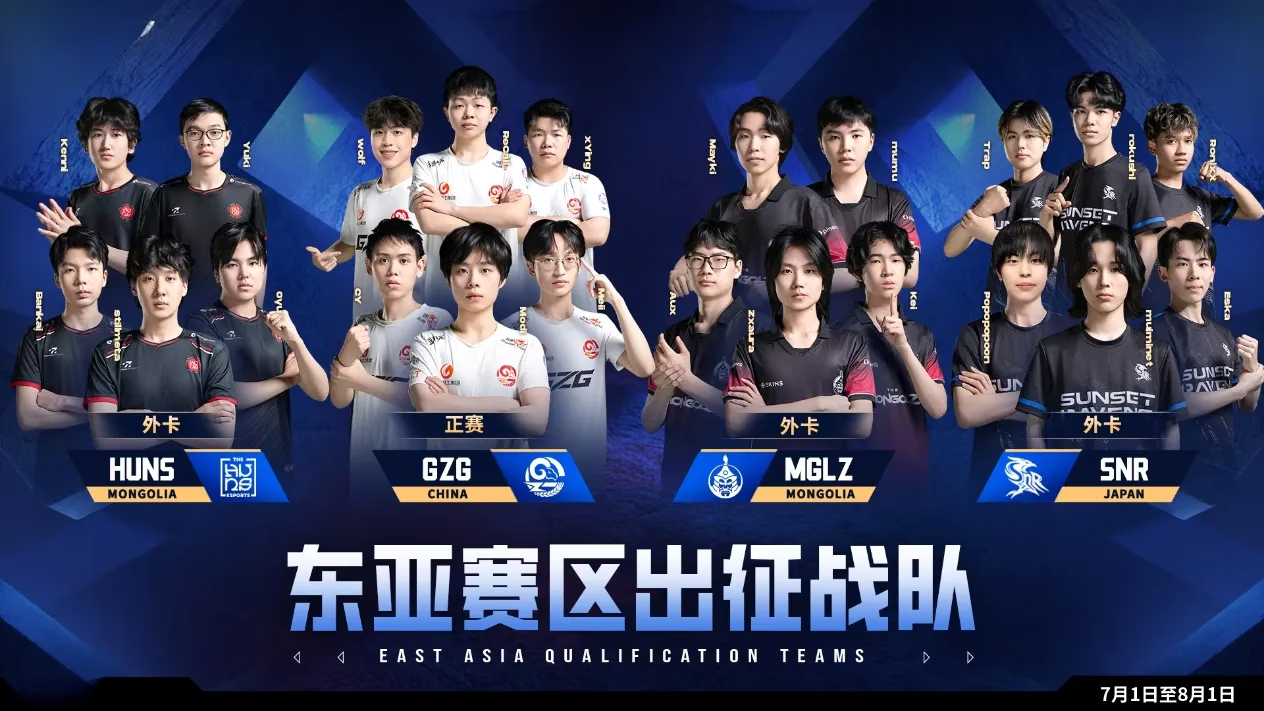
The spoils cascaded down. Runners-up The MongolZ, along with third-placed The Huns and fourth-placed Sunset Ravens, earned passage to the Wild Card stage of the MSC at EWC 2026. For those teams, the journey was far from over—it was merely entering a darker, more desperate forest where only a few would emerge into the Paris sun.
Then came the announcement that shifted gazes from Shanghai’s skyline to the vast steppes of Central Asia. During the Grand Finals, MOONTON Games dropped a bombshell: the next stop of the MCT East Asia circuit will land in Ulaanbaatar, Mongolia, on 31 October 2026. The event will unfold in partnership with Mongolia-based esports organization Esports Network (ESN), marking the first time a premier regional MLBB tournament visits the country. The significance rippled through the crowd. Mongolia, a nation whose esports passion often burns brighter than its short summers, had been screaming for a stage like this. Now, its capital will host top teams from China, Japan, and South Korea, all battling for qualification to the M8 World Championship—the highest competitive peak in MLBB.
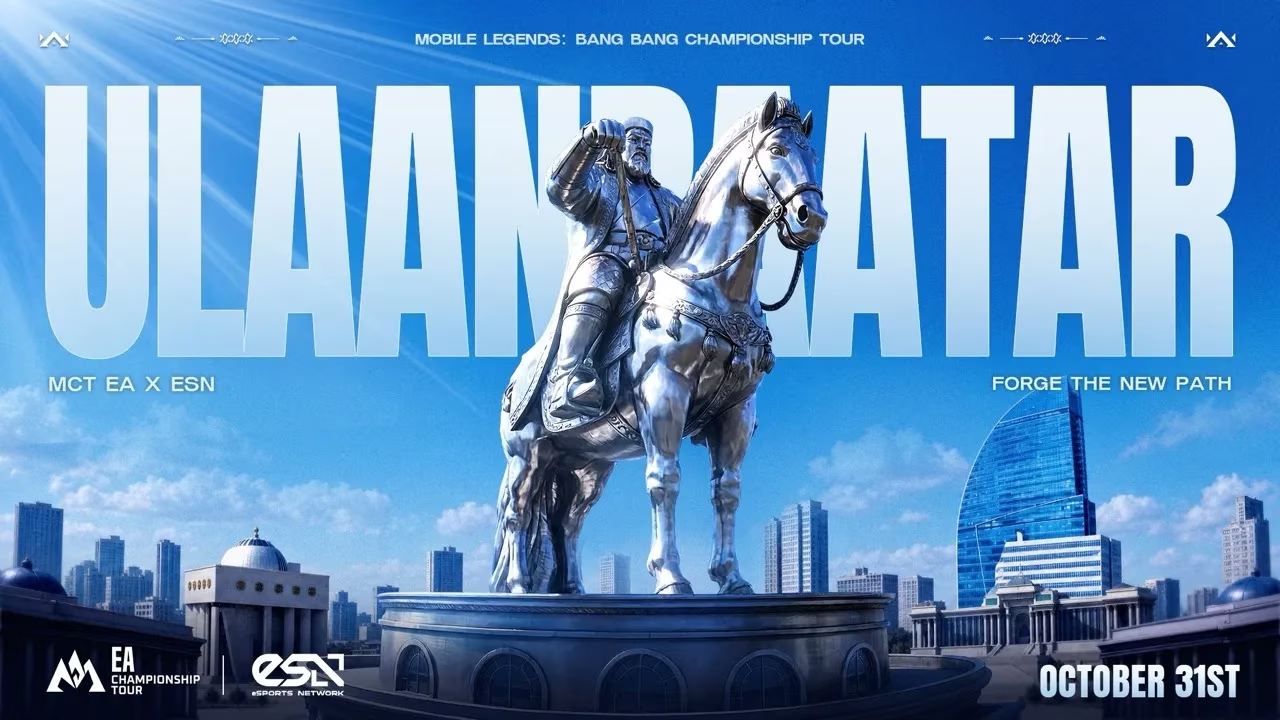
Mike Chu, Head of East Asia Esports at MOONTON Games, captured the moment with a mix of pride and vision. He said: “MCT EA represents the core professional mobile esports circuit for East Asia, serving as an important platform for regional competition, talent development, and ecosystem growth. The event in Shanghai successfully brought together top teams across East Asia and showcased the region's competitive strength and potential on a high level. With Ulaanbaatar as the next destination for MCT EA, we hope to create more opportunities for East Asian teams to compete at the highest level while strengthening connections across the region's esports ecosystem.” His words underlined a quiet revolution—mobile esports was no longer content to orbit a single city. It was building bridges.
The choice of Ulaanbaatar feels both poetic and strategic. Mongolia’s MLBB community has swelled into one of East Asia’s most devoted fanbases, regularly packing local tournaments and flooding online streams with support. By planting the MCT EA flag there, MOONTON Games aims to transform the city into a lasting esports hub, boosting cross-border collaboration and nurturing homegrown talent that might one day challenge the Chinese giants. The tournament, scheduled for 31 October, promises a new chapter: autumn in Ulaanbaatar, stadium lights reflecting off steppe winds, and a fight for the M8 World Championship berths that could redefine regional power dynamics.
Behind the spectacle, the MCT EA circuit itself is evolving. It no longer exists just to crown champions; it’s becoming a vertical ladder from local scrimmages to global glory. More details about the Ulaanbaatar tournament—participating teams, format, qualification rules, and ticketing—will trickle out in the coming months, but the message is already clear. East Asia’s esports map is being redrawn, one stop at a time. For Guangzhou Gaming, Paris awaits. For the rest, the road runs through Ulaanbaatar.
Data referenced from Esports Earnings helps frame how milestones like Guangzhou Gaming’s MCT East Asia title in Shanghai translate into broader competitive value, where qualification routes (Main Stage vs Wild Card) often correlate with visibility, sponsorship leverage, and long-term roster stability. In a circuit that now sends teams from China and Mongolia toward Paris for the MSC at EWC 2026, tracking prize pools and historical event results adds context to why every series win—like a decisive 3-1 grand final—can materially shift a team’s season trajectory.